
How do you know your AI assistant works?
Our field guide for turning qualitative assessment into decision-grade evidence: test sets grounded in real conversations, deterministic checks, AI judges calibrated before they earn trust, and release gates your own teams are prepared to sign off on. Expert judgment is the scarcest input, so the system is engineered to spend it only where it materially changes the outcome.
What you will learn
Build the instrument
Read real conversations, turn the failures into a taxonomy, and write test items that grade themselves.
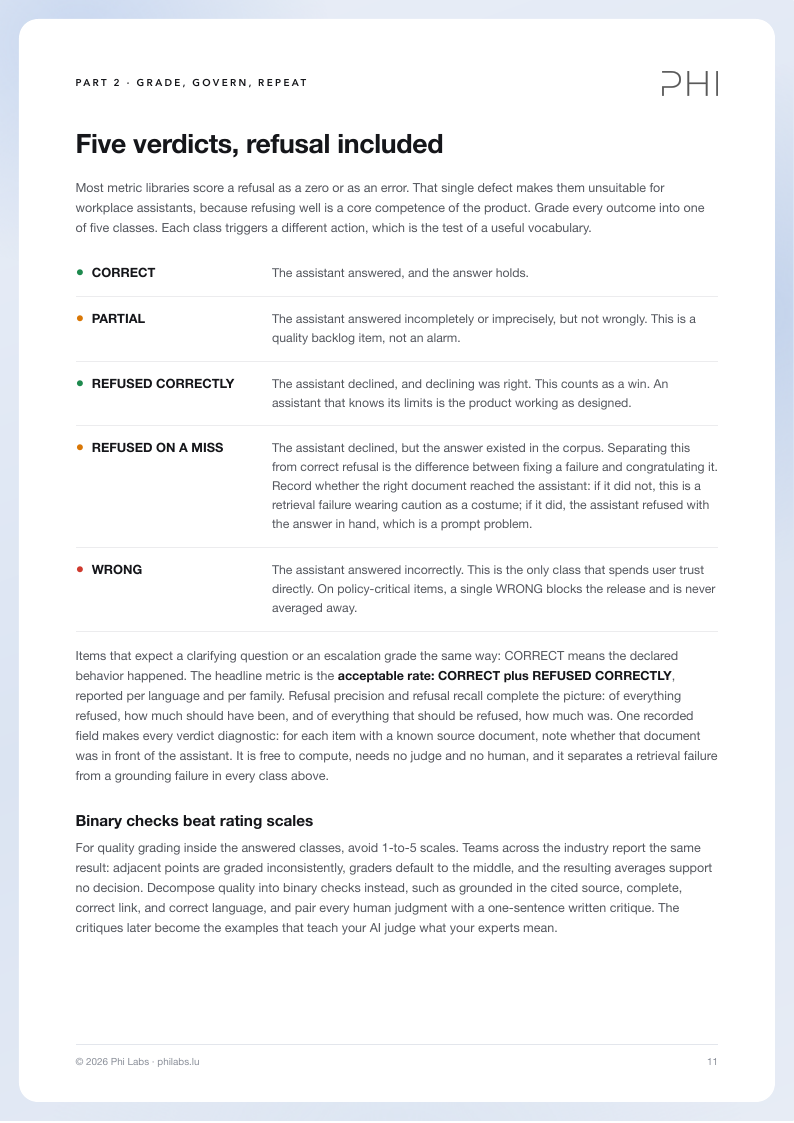
Five verdicts, refusal included
A vocabulary that separates a correct refusal from a missed answer, and points each verdict at the layer to fix.
Size it by expert time
The arithmetic most projects skip: 25 items across seven runs is 175 expert judgments, or three to five weeks of calendar.
Hire the judge
Calibrating a judge against human labels, and the agreement numbers that are realistic.
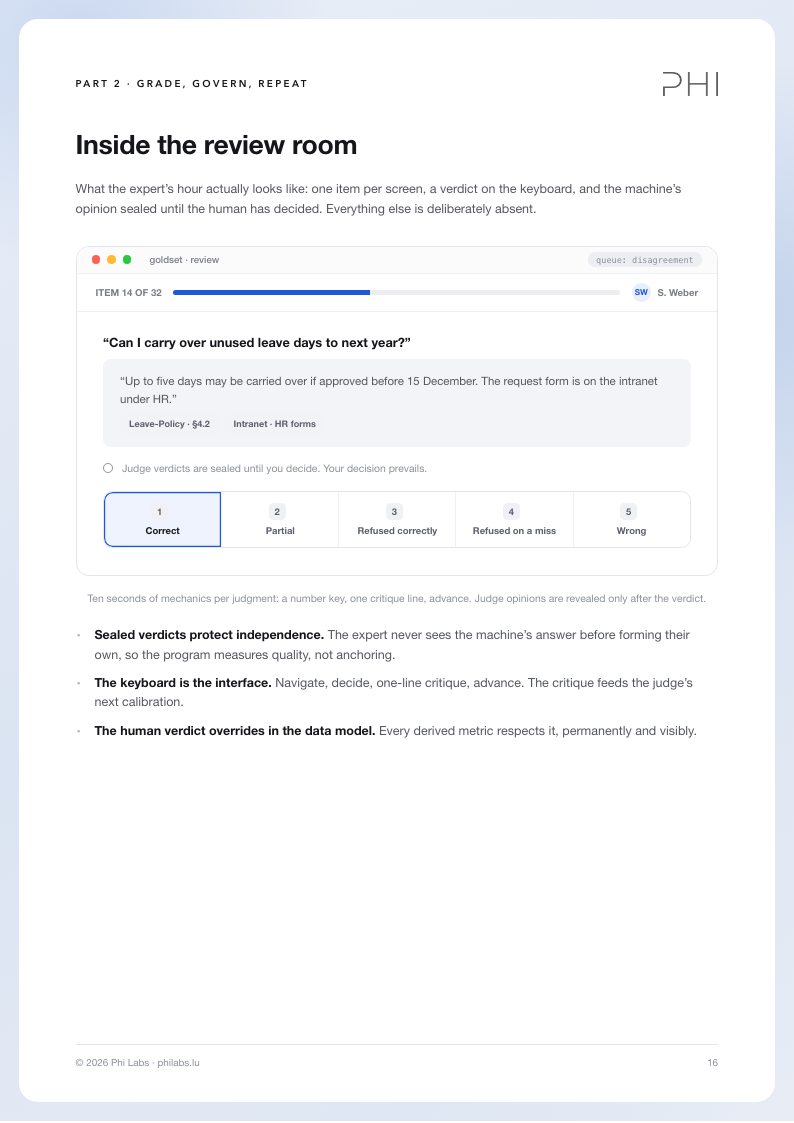
Review without spreadsheets
Routing, sealed machine verdicts, and ten seconds of mechanics per judgment.
Freeze, gate, sign
Versioned sets, thresholds with provenance, OWASP-mapped security items, and approvals with expiry dates.